Keeping Herb Flavor Through Winter: Comparing Drying, Freezing, and Oil Infusions
Comparison of approaches
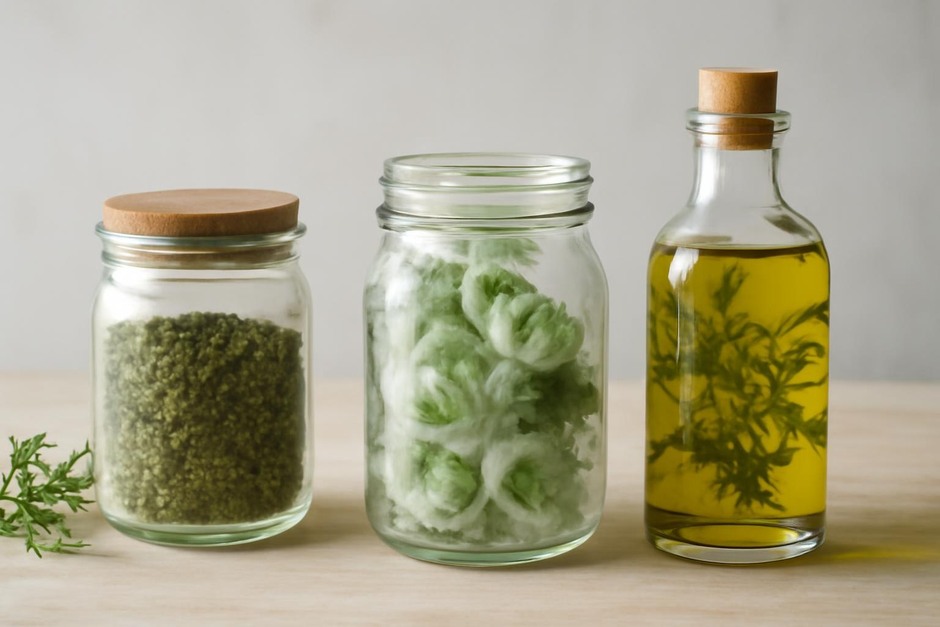
When you want to keep garden or market herbs usable through the colder months, three general approaches dominate: drying (air or oven), freezing, and infusing into oil. Each preserves different aspects of flavor, texture, and convenience. Below is a calm, checklist-style comparison of what each method delivers, followed by common mistakes and simple corrections.
1. Drying (air-dry, dehydrator, or low oven)
What it preserves: concentrated, earthy flavors and long shelf life; best for woody or robust herbs such as rosemary, thyme, and oregano.
- Common mistakes and fixes:
- Leaving damp leaves together: risk of mould. Fix: dry only fully dry leaves; spread in a single layer with airflow.
- Using too high heat: scorched, bitter herbs. Fix: use low temperature (dehydrator setting or oven below 100°C / 212°F) and check frequently.
- Storing with light exposure: loss of aroma and color. Fix: store in opaque or dark glass jars in a cool, dry cupboard.
- Crushing too early: volatile oils lost. Fix: crumble just before adding to dishes rather than pre-crushing into powder.
2. Freezing (whole leaves, chopped, or in ice cubes)
What it preserves: fresh-green notes and more of the volatile aromatics; best for delicate herbs like basil, parsley, and cilantro when you want brighter flavor than dried offers.
- Common mistakes and fixes:
- Freezing wet herbs directly: ice crystals damage tissue and foster freezer burn. Fix: pat leaves dry thoroughly before freezing.
- Packing leaves loosely in bags: crushed and clumped leaves. Fix: flash-freeze on a tray first, or press flat between parchment before bagging.
- Not portioning: hard to use small amounts. Fix: freeze in tablespoon portions or in oil/water ice cube trays for easy single-use cubes.
- Long storage without labeling: poor rotation. Fix: label with herb and date; use within 6–12 months for best flavor.
3. Oil infusions (fresh or dried herbs in neutral oil)
What it preserves: aromatics and a ready-to-use flavored fat for finishing dishes or dressings; works well with basil, thyme, oregano, and tarragon. Note: this method changes the form—herb becomes culinary oil rather than a leaf to toss into a salad.
- Common mistakes and fixes:
- Using fresh wet herbs submerged in oil and storing at room temperature for long periods: risk of bacterial growth. Fix: use dried herbs or refrigerate infused oil and use within a short timeframe (a few weeks); always keep oil chilled when herbs were fresh.
- Overheating oil to extract flavor: burnt or flat notes. Fix: infuse gently and remove from heat early; try cold-infusion for subtler results.
- Storing in warm or sunny spots: rapid degradation and off-flavors. Fix: keep oil in a cool dark place or the refrigerator if you plan to store longer.
- Not straining particulate matter: debris shortens shelf life. Fix: strain through a fine sieve or muslin and bottle cleanly.
Guidance on choosing between them
Ask three practical questions to decide which approach to use, then consult the short scenario checklist below.
Questions to guide your choice
- What flavor profile do you prefer in winter cooking? If you want long-lasting, concentrated flavor, choose drying. For fresh-bright notes, choose freezing. For ready-to-use flavored oil, choose infusion.
- How will you use the herbs? If you add herbs to slow-cooked dishes or dry rubs, dried is convenient. If you want to finish soups, sauces, or pesto-style mixes, frozen herbs keep a fresher character. If you frequently dress salads or finish roasted vegetables with a flavored fat, oil is efficient.
- What storage and fridge/freezer space do you have? Drying requires the least cold storage. Freezing needs freezer space and portioning. Infusions need clean containers and refrigeration if fresh herbs are used.
Quick scenario checklist
- You grow plenty of robust herbs (rosemary, oregano) and want long shelf life: dry them. Checklist: harvest before midday, rinse and thoroughly dry, low-temp drying, store in dark jars.
- You use delicate herbs (basil, parsley) for bright finishes and have freezer space: freeze in small portions or oil cubes. Checklist: dry leaves, flash-freeze or pack into ice-cube trays with a little water or oil, label and use within a season.
- You want a quick finishing ingredient and use flavored oils often: make small batches of infusion. Checklist: prefer dried herbs for shelf-stable infusions or refrigerate fresh-herb infusions and strain well; keep bottles cool and use within weeks.
All three methods are modest in time and equipment. Choosing the right one for your kitchen habits and the herbs you grow or buy keeps winter meals simple and flavorful. Use the checklists above to avoid the most common mistakes, and you’ll keep more of what you love about fresh herbs—even off season.